
Western Tent Caterpillars
We've been hanging out in a spot that's pretty far out for the past week. No wifi, no service, and I've been loving it. It's made for slower days, less distractions, and being able to focus in on the things I enjoy doing. Painting by the creek. Reading. Working on illustrations without the constant pull to "just look at Dribbble or Pinterest for some quick inspiration." It's also brought up thoughts and feelings on what and why we share on social media. To be completely honest, I think a lot of it does have to do with validation and knowing that the stuff I create is liked. At the same time, as someone who illustrates, photographs, manages social media for a living - it's hard to extricate myself from the social world too.
I think social media has benefits. I love following my friends, various science accounts, #wildflowerwednesdays - but as with anything, it's a balance. It's a constant self-reflection of "how is this benefitting my well-being and the well-being of others." I don't have the answers on what is too much or if none at all is beneficial - but I can tell you one thing: I've been really loving the motivation of finding interesting information to pair with my macro photos. And I think learning more about the world around us is a beneficial thing. I know that I'm learning a ton and I hope that maybe it's inspiring others to stay curious.
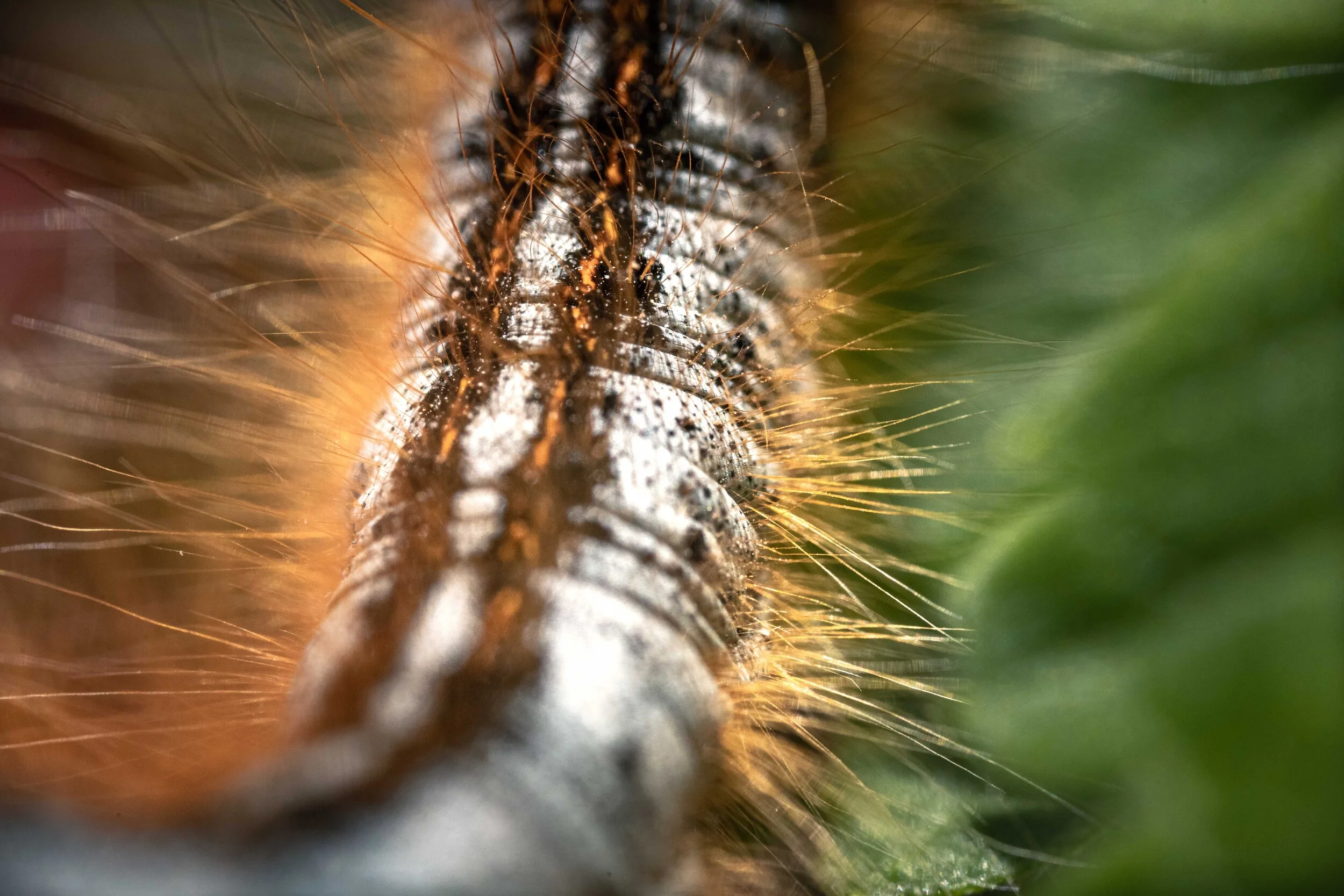
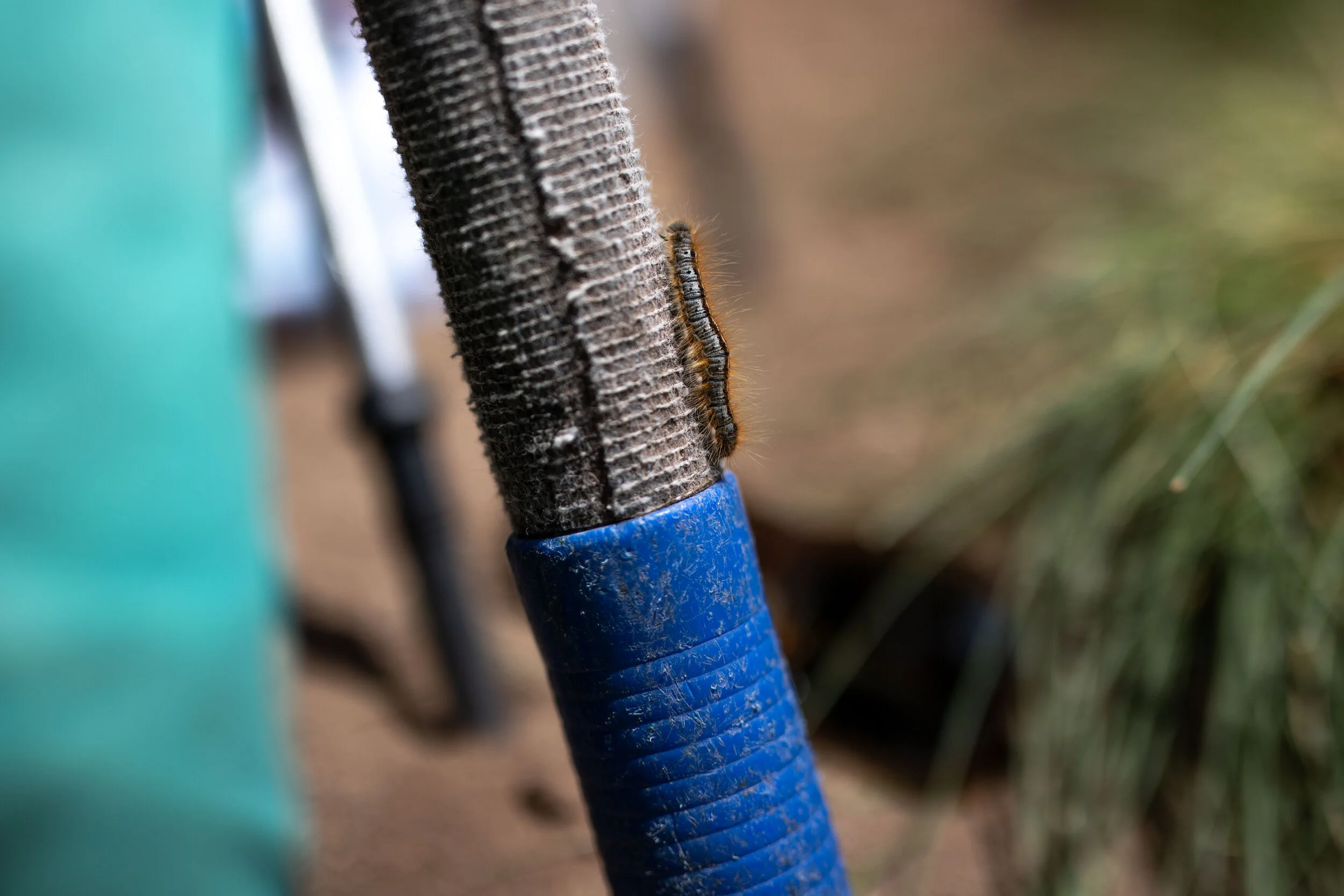
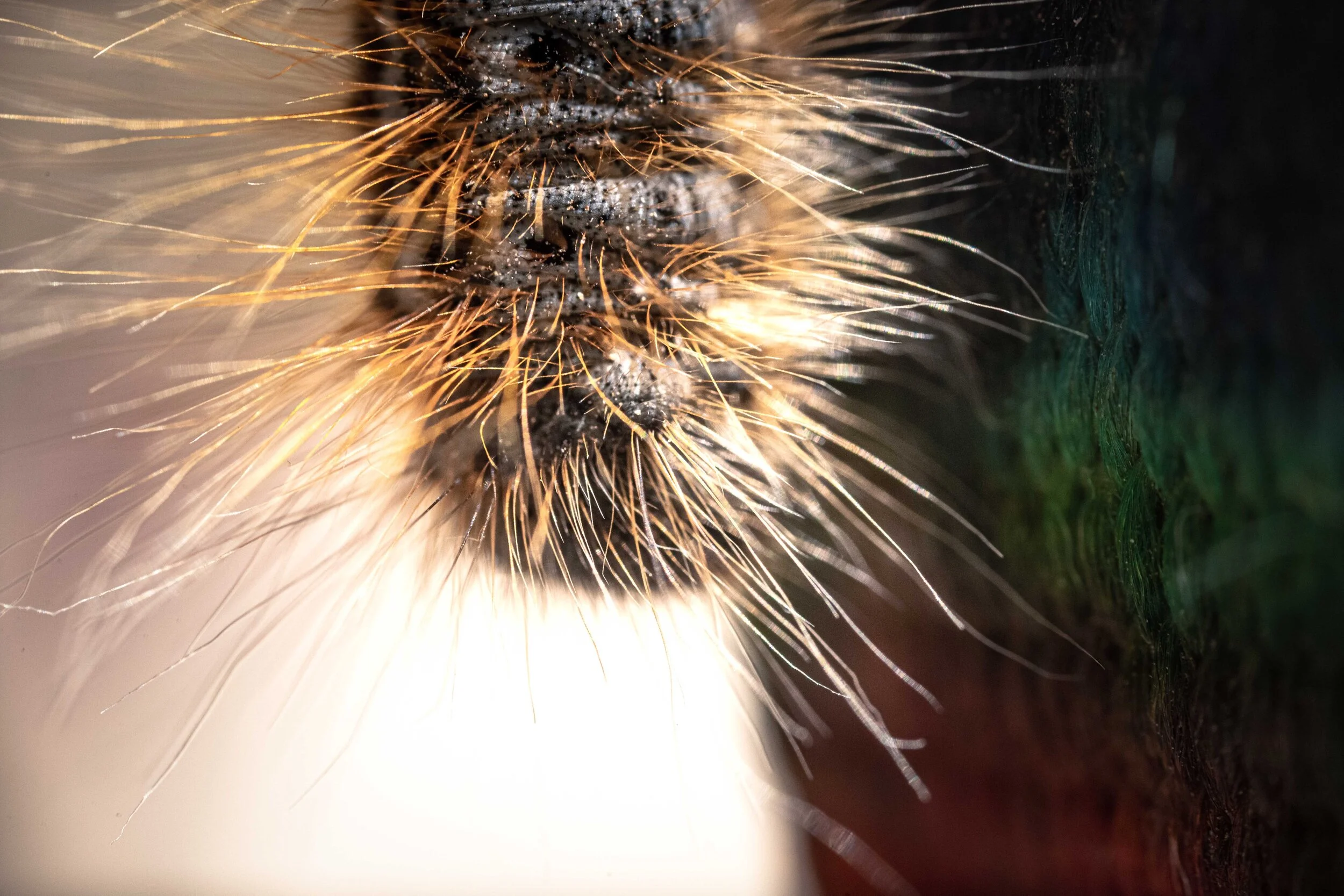
So here today we have a Western Tent Caterpillar. This little guy was checking out our gear the other day and I loved how fluffy and sporting he was (he was seriously hauling ass across the trails). I assumed he was going to be something new and exciting I'd never seen before - turns out, not so much. These dudes are pretty prolific - often to the point of their own demise. I found a ton of information on them at the USFS site, but here's a quick synopsis of what I learned:
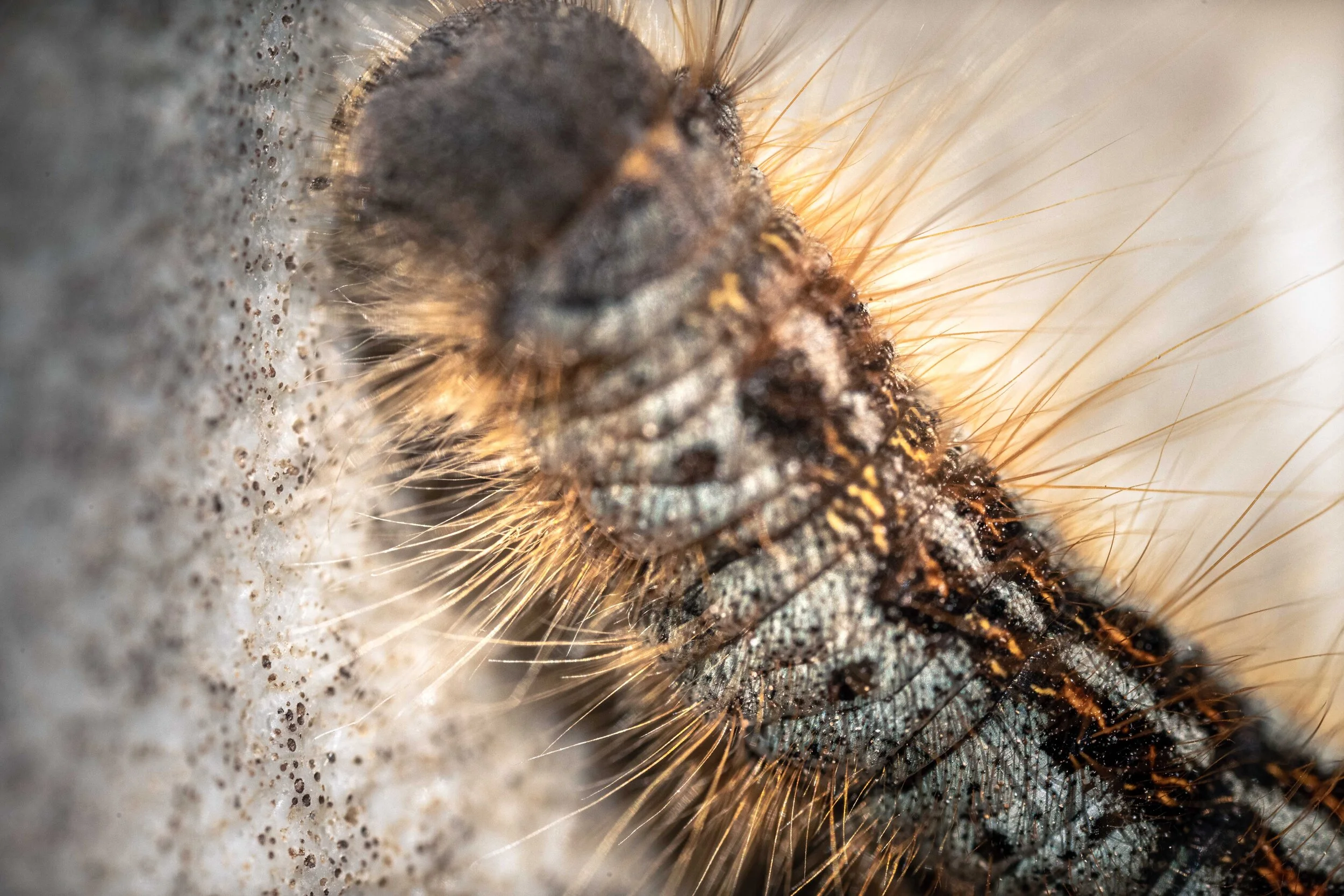
They grow into moths and have one reproductive cycle a year. They create white silken tents in the branches of host trees (most often, aspens) where the larvae grow up as a big 'ol colony. The caterpillars bust out of the tent in their late instar phases to finish feeding and growing before beginning the pupation process. I both do and don't encourage you to google "western tent caterpillar nests" - they are so cool and also pretty gnarly if you're squeamish.
Unfortunately, these guys can do damage to their host trees - especially if their populations get out of control. However, more often than not, when they do have population explosions, predators, lack of foliage, and unfavorable weather, all add up to bring them back to a sustainable population.
Looking for more information on these guys? Check it out here!